Prof. Dr.-Ing. Lutz Mädler - Vice President of the DFG starting on 01.01.2027


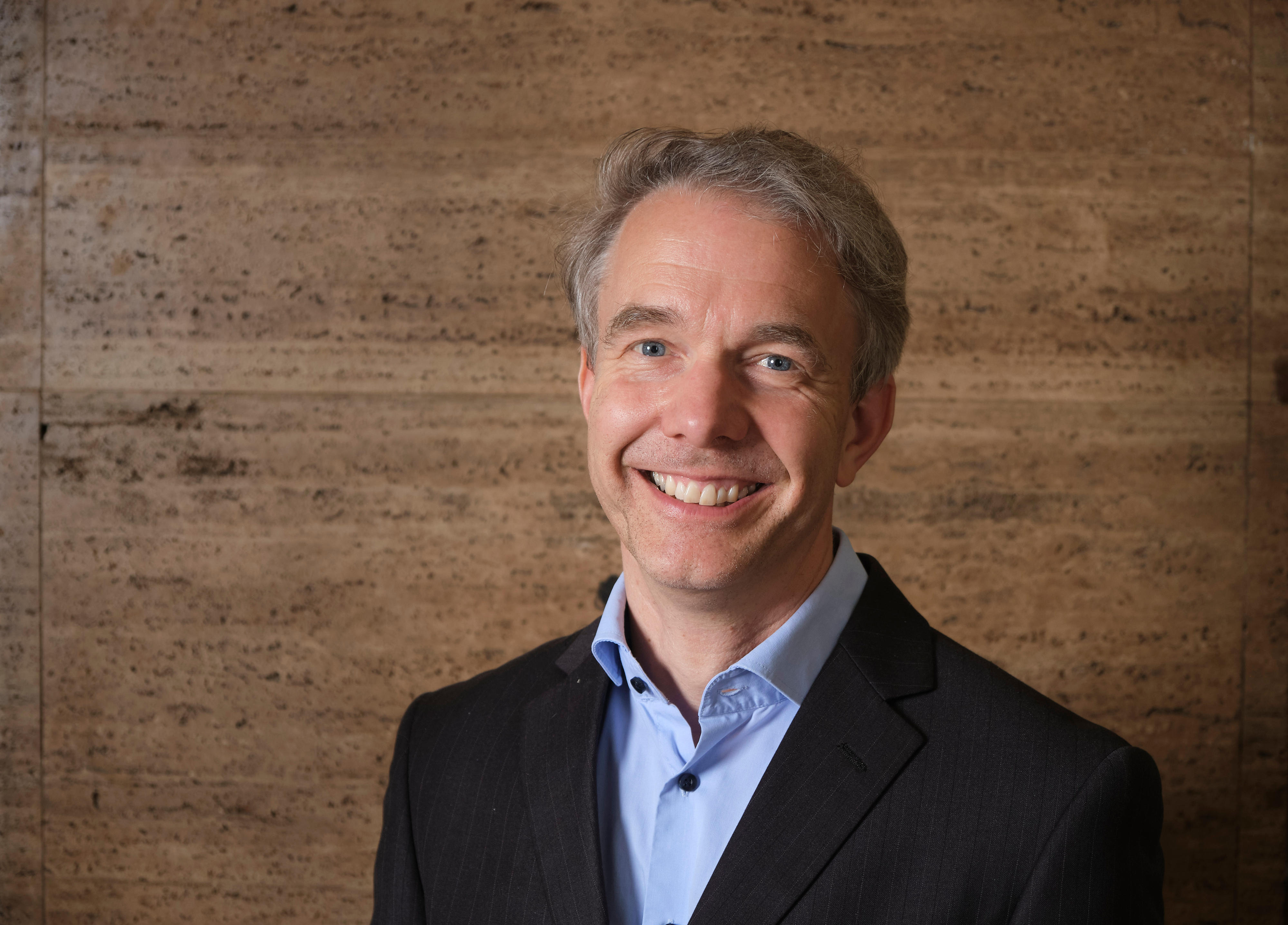
Position
Professor of Particle and Process Engineering, University of Bremen; Director of the Leibniz Institute for Materials Engineering (Leibniz-IWT)
Qualifications and Career
My background is in applied physics, but my passion for chemical and process engineering took root during my doctoral studies at the Fraunhofer Institute for Toxicology and Experimental Medicine ITEM and the Technische Universität Bergakademie Freiberg (Germany), where I first specialized in aerosols, particles, droplets, and sprays. This transition marked a pivotal shift in my career, bridging my initially practice-oriented scientific education at the University of Applied Sciences Zwickau with advanced academic research.
As a dedicated researcher and teacher at ETH Zürich and the University of California, Los Angeles (UCLA), I developed profound expertise in the reactive spray synthesis of nanoparticles and their interface interactions. During my time at UCLA, Andre Nel and I initiated a U.S. National Science Foundation (NSF) Science and Technology Center (CEIN) that remained a key collaborative partner over many years.
Since joining the University of Bremen in 2008, I have led a research group of approximately 30 scientists and technicians. While gas-phase processes remain my primary focus, my team has significantly expanded our work in chemical and process engineering for novel functional materials. Today, my research encompasses the handling, formulation, and mechanical and chemical manipulation of particles, contributing substantially to both academic and industrial advancements in particle synthesis and characterization.
My engagement in large collaborative research projects has sparked my fascination with different disciplinary approaches and has strengthened my ability to think and act across disciplinary boundaries. It has also deepened my understanding of academic structures in which interdisciplinary research can thrive.
Degree programs
| Jahr | Beschreibung |
|---|---|
| 1999 | Dipl.-Ing. in Process Engineering, Technische Universität (TU) Bergakademie Freiberg, Germany |
| 1996 | Diplom (FH) in Applied Physics, University of Applied Sciences Zwickau (formerly Technical University of Zwickau), Germany |
Doctorate
| Jahr | Beschreibung |
|---|---|
| 1999 | Dr.-Ing. in Chemical and Process Engineering, TU Bergakademie Freiberg, Germany (summa cum laude) |
Habilitation
| Jahr | Beschreibung |
|---|---|
| 2003 | Habilitation in Process Engineering, Department of Mechanical and Process Engineering, ETH Zürich, Switzerland |
Stages of academic/ professional career
| Jahr | Beschreibung |
|---|---|
| 2008 - present | Professor of Particle and Process Engineering, Faculty of Production Engineering, University of Bremen, Germany. |
| 2008 - present | Director of Process and Chemical Engineering Division, Leibniz Institute for Materials Engineering (Leibniz-IWT); formerly Foundation Institute for Materials Science (IWT), Bremen, Germany |
| 2008 - 2015 | Visiting Professor, University of California, Los Angeles, USA |
| 2005 - 2007 | Lecturer and Research Associate, Department of Chemical Engineering, University of California, Los Angeles, USA |
| 1999 - 2005 | Senior Scientist (Oberassistent) and project leader, ETH Zürich, Particle Technology Laboratory, Switzerland. |
| 1996 - 1999 | Research Assistant, Fraunhofer Institute of Toxicology and Aerosol Research, Hannover, Germany. |
Supplementary Career Information
As full-time working parents of two children born in Switzerland and the USA, we experienced this as an exciting, cherished, and formative time that also provided first-hand experience of the challenges associated with a dual-career family. I am also the first in my family to pursue an academic path. As Director of Leibniz-IWT, both experiences have shaped my work towards an open-minded and supportive academic environment that enables everyone to reach their full potential while being sensitive to diverse backgrounds and personal circumstances.
Engagement in the Research System
Leadership in research
As one of three Directors of IWT in Bremen, I co-led the integration of IWT into the Leibniz Association in 2018.
I initiated and served as spokesperson of the Collaborative Research Centre “Farbige Zustände” (SFB 1232, DFG, 24 projects, 2016 to 2021), integrating new processes for primary shaping, micro structure formation (“coloration”) and characterization of microscopic material samples with data science-based methods towards high throughput.
I received the ERC Advanced Grant “Inverted Reactive Spray Processes for Sulphide/Nitride High Surface Area Electrode Coatings” (ERC 786487, 2019 to 2025), aimed at fundamentally advancing the strength of the processes by generating a knowledge-base for sulphide and nitride materials.
Since 2020, I have been the spokesperson of the DFG priority program “HeteroAggregates” (SPP 2289), dealing with the creation of synergies in tailor-made mixtures of heterogeneous powders.
In 18 subprojects, we bring together expertise from different interdisciplinary research directions and provide a fundamental understanding of the relevant mixing phenomena and their modelling.
Since 2026, I have been a member of the Steering Board of the Cluster of Excellence “The Martian Mindset: A Scarcity-Driven Engineering Paradigm” (EXC 3036) at the University of Bremen.
Leadership in teaching
I see myself as a teacher and I have taught in three different countries and across diverse academic systems. I believe in research-oriented, open teaching materials and therefore integrate jupyter notebooks into my teaching, making them openly accessible via GitHub. I also support fellow professors in their teaching activities and serve as a mentor for early- and mid-career researchers in their professional development.
Academic citizenship
Since 2024, I have been a member of the Committee for Research Buildings and Infrastructure
of the German Science and Humanities Council.
Since 2022, I have been a member of the Board of Trustees of the Möller-Foundation for Science and Research, Hamburg, and from the end of 2026 I will assume the role of Chair of the Board.
Since 2020, I have been an elected member of the DFG Review Board “4.21 Process Engineering, Technical Chemistry”. Since 2024, I have also served as its elected Chair.
I have been a member of the Management Board of the MaterialDigital platform (BMBF) since 2019. This German-wide project aims to provide contextualized materials data in order to lay the foundation for the development of an efficient ontology for materials and associated processes.
I became a member of the Academy of Science and Engineering in Germany (acatech) in 2017.
At the University of Bremen, I have been Chair of the Doctoral Committee of Faculty 4: Production Engineering since 2011. In addition, I served as Vice Dean of the Faculty from 2011 to 2017.
Supervision of Researchers in Early Career Phases
As a first-generation academic, helping students and researchers to excel and to take their own steps in their careers is the most enjoyable and rewarding mission in my profession. I have been very fortunate to engage with highly talented people at all career levels with very different dreams, ideas, and boundary conditions. I see my task as challenging them and encouraging them to think big while providing freedom in their research, enabling them to form networks, and supporting them throughout their careers. I value career trajectories in industry as highly as those in academia. I foster a network of my group members who have moved on to leading positions in industry. Many of my students now hold academic positions as professors and postdoctoral researchers around the world. I am very happy that some of my former students have won prizes for their Master’s and PhD theses.
Scientific Results
Presented here are ten selected publications spanning 25 years of research. My early seminal works [1–4], each with over 1,000 citations, advanced the fields of nanomaterial synthesis, nanobio interactions, and predictive modelling. My more recent contributions [5–10] demonstrate the current breadth and evolution of my laboratory’s activities.
[1] A. Nel, T. Xia, L. Mädler, N. Li, Toxic potential of materials at the nanolevel, Science 311(5761) (2006) 622-627.
[2] T. Xia, M. Kovochich, M. Liong, L. Mädler, B. Gilbert, H. Shi, J.I. Yeh, J.I. Zink, A.E. Nel, Comparison of the Mechanism of Toxicity of Zinc Oxide and Cerium Oxide Nanoparticles Based on Dissolution and Oxidative Stress Properties, ACS Nano 2(10) (2008) 2121-2134.
[3] A.E. Nel, L. Mädler, D. Velegol, T. Xia, E.M.V. Hoek, P. Somasundaran, F. Klaessig, V.
Castranova, M. Thompson, Understanding biophysicochemical interactions at the nano–bio
interface, Nature Materials 8(7) (2009) 543-557.
[4] L. Mädler, H.K. Kammler, R. Mueller, S.E. Pratsinis, Controlled synthesis of nanostructured particles by flame spray pyrolysis, J. Aerosol. Sci. 33(2) (2002) 369-389.
[5] S. Pokhrel, J. Stahl, J.D. Groeneveld, M. Schowalter, A. Rosenauer, J. Birkenstock, L. Mädler, Flame Aerosol Synthesis of Metal Sulfides at High Temperature in Oxygen Lean Atmosphere, Adv Mater 35(28) (2023) e2211104.
[6] B. Bayerlein, M. Schilling, H. Birkholz, M. Jung, J. Waitelonis, L. Mädler, H. Sack, PMD Core Ontology: Achieving semantic interoperability in materials science, Materials & Design 237 (2024).
[7] S. Pokhrel, J. Stahl, L. Wang, R. Tang, H. Sun, M. Schalk, M. Schowalter, A. Rosenauer, J. Huang, J. Kiefer, J. Birkenstock, L. Mädler, Photo Electrocatalytic Water Splitting Using Sn Doped In2S3 Homologous Series Synthesized in Oxygen Deficient Flame, Adv. Funct. Mater. (2024).
[8] J.D. Groeneveld, S. Pokhrel, L. Mädler, Flame emission spectroscopy of single droplet micro explosions, Nanoscale Horizons (2024).
[9] A. Chouhan, L. Mädler, N. Ellendt, Modeling of rapid solidification in Laser Powder Bed Fusion processes, Computational Materials Science 238 (2024).
[10] M. Vollbrecht, K. Krieger, J. Grundmann, H. Birkholz, N. Riefler, L. Mädler, An integrated data pipeline for semantic data representation of the flame spray pyrolysis process, F1000Research 14 (2025).
I believe in the FAIR principles and thus in sharing software and algorithms that have been part of a publication. I also foster these principles in my current role as the lead for research data management activities within the Cluster of Excellence “The Martian Mindset” (EXC 3036) at the University of Bremen.
Below, I list five examples from my group that are open access: A code for particle film simulation can be found in [a]. An experimental library for discrete differential geometry curvature in fluid simulations [b] gives insights into how the novel method published can be directly applied to other examples. The base code OpenFOAM for the simulation of two metals mixing using laser ray tracing in the LPBF process can be found in [c]. The data management guidelines of my group are published as open access [d]. An example of open teaching packages is listed in [e].
[a] (externer Link)
[b] (externer Link)
[c] (externer Link)
[d] (externer Link)
[e] (externer Link)
Academic Distinctions
I received the highest German science awards in Chemical Process Engineering (Dechema Award, 2009) as well as across all scientific disciplines (Leibniz Award of the DFG, 2017). I also received the Reimar Lüst Award of the Max Planck Society (2017), the Smoluchowski Award (Aerosol Society, 2005), and the BASF Award in Process Engineering for Young Scientists (2004).