DFG Takes Part in Inauguration of New Telescope in Chile
The Fred Young Submillimeter Telescope (FYST) at the Cerro Chajnantor Atacama Telescope Observatory (CCAT) in Chile was officially inaugurated on 9 April. Approximately 100 guests attended the festive occasion, including a delegation from the Deutsche Forschungsgemeinschaft (DFG, German Research Foundation).
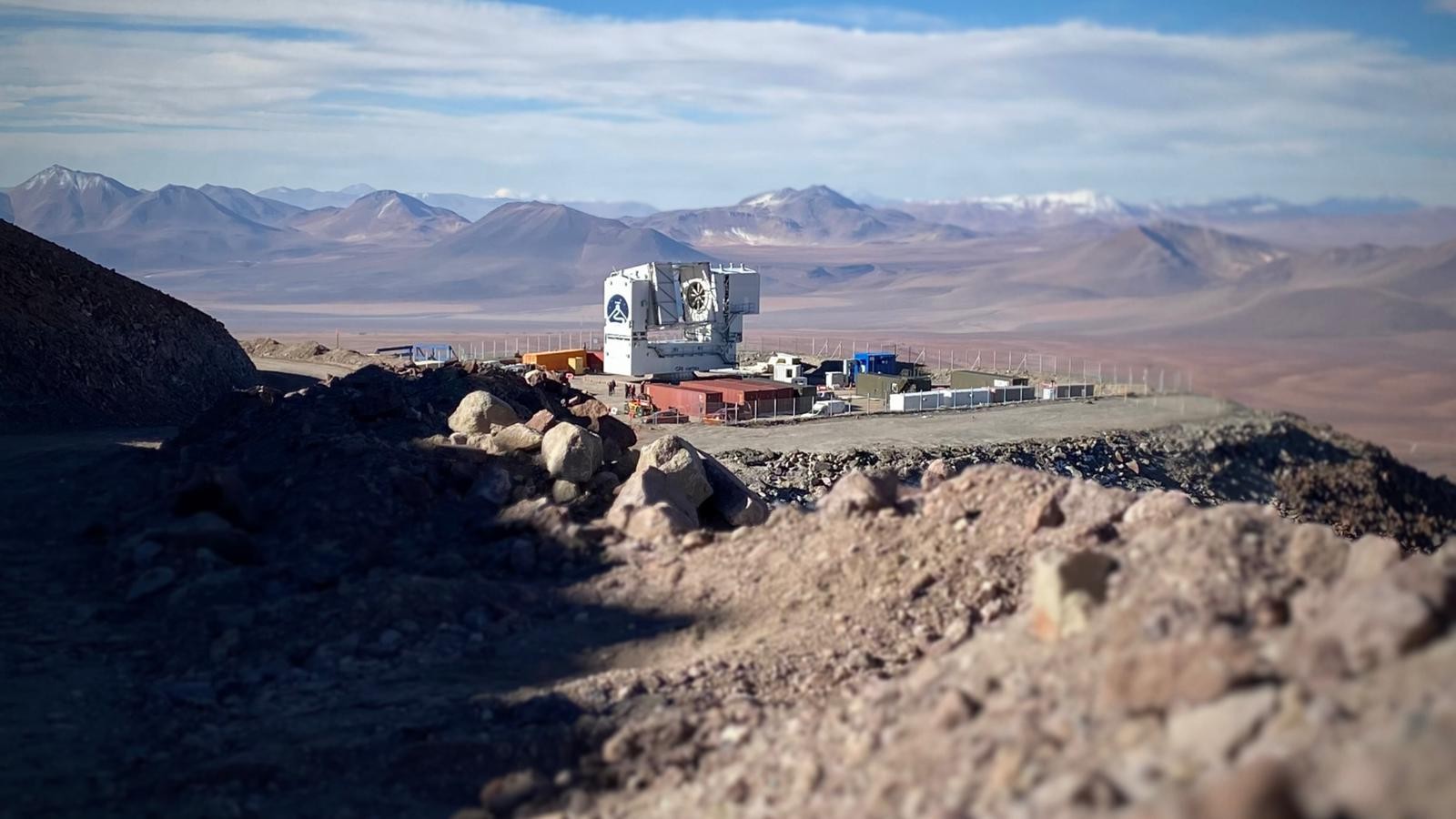
© Nicolas Carl / University of Cologne
The FYST is the first submillimetre telescope to be operated primarily by universities. Thanks to its innovative optical design, the telescope enables particularly rapid and efficient mapping of the sky. These measurements will be used to investigate dark energy and the earliest phases of the universe and galaxy formation, as well as the dynamics and distribution of the interstellar matter in our Milky Way.
The project is the result of the international CCAT consortium, which includes the universities of Cologne and Bonn, the Max Planck Institute for Astrophysics, Cornell University and a Canadian consortium led by the University of Waterloo. Astronomers from nine Chilean universities are also involved. The structure of the telescope, along with its drive and control systems, was developed and manufactured by the German company CPI Vertex Antennentechnik.
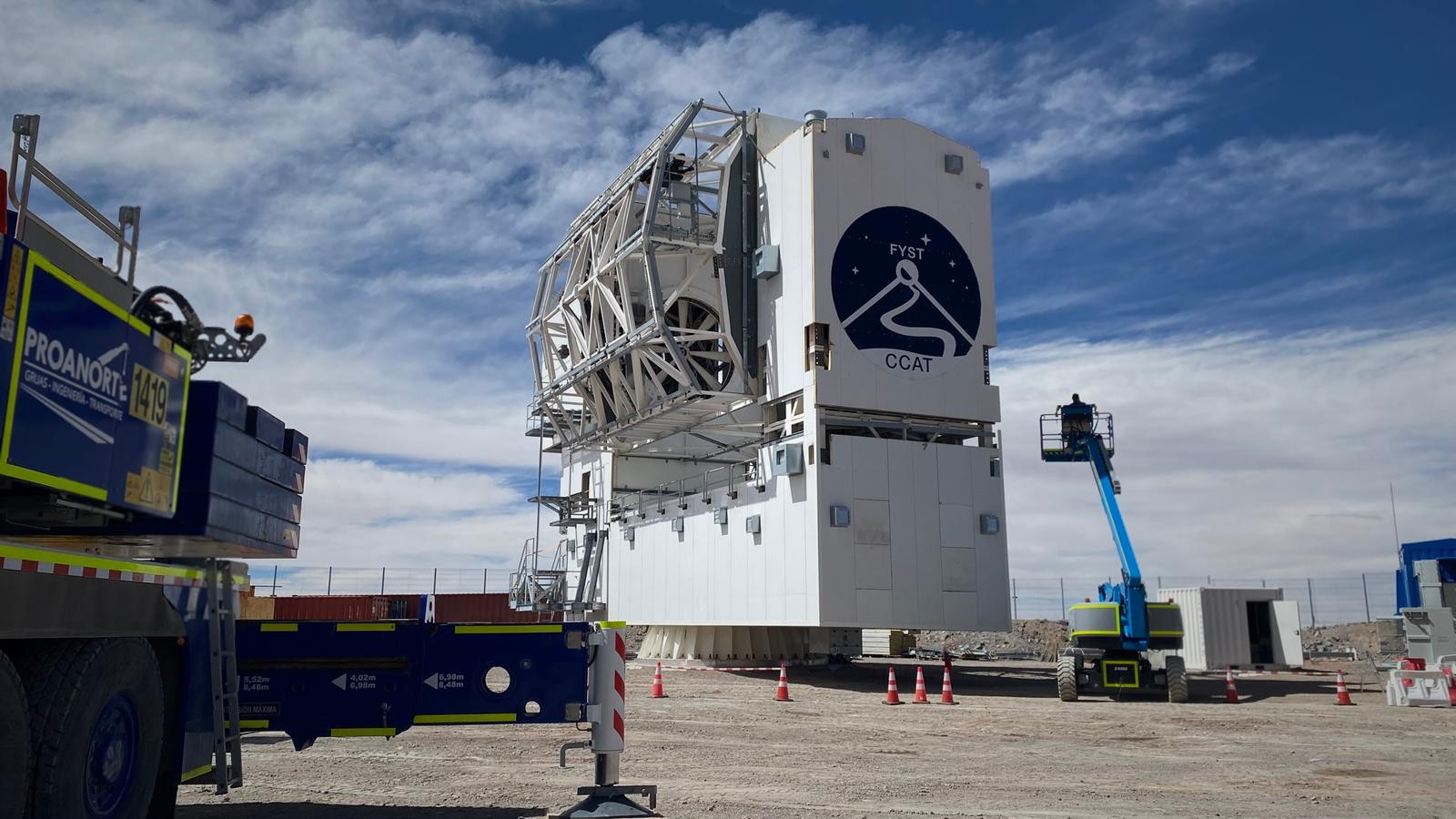
© Nicolas Carl / University of Cologne
The telescope was set up in the Chilean Andes at an altitude of 5,640 metres. As such, it is positioned above a large part of the Earth’s atmosphere, thereby significantly reducing atmospheric interference. The dry air of the Atacama Desert has a very low water vapour content, so this provides particularly clear and precise observing conditions in the submillimetre range.
The FYST is named after Fred Young, the project’s principal benefactor and a former student of Cornell University. Financial support for the construction was provided by the DFG, the Max Planck Institute for Astrophysics and the participating universities. The telescope’s design had to be modified several times for technical and financial reasons. Dr. Achim Tieftrunk, who has supported the project at the DFG for 15 years, said at the inauguration: “The decision taken in 2011 was not aimed at a specific design. It was a commitment to a community, to a scientific vision and to the long-term value of exploring the cold universe. As I look around today, I can say: that commitment has paid off.”

© Nicolas Carl / University of Cologne
In addition, the DFG also funds accompanying research activities, for example through the Collaborative Research Centre (externer Link). The aim is to deepen scientific understanding, strengthen interdisciplinary collaboration and support researchers in early career phases. The new Cluster of Excellence (externer Link) – funded under the Excellence Strategy of the German Federal and State Governments – will also make extensive use of the FYST for research projects and develop additional instruments for the telescope for this purpose. This cluster is a collaboration between the universities of Cologne and Bonn, Forschungszentrum Jülich, the Max Planck Institute for Radio Astronomy, the German Aerospace Center and the Heidelberg Institute for Theoretical Studies (HITS).