Indo-German Research Highlights – Walter Benjamin Programme
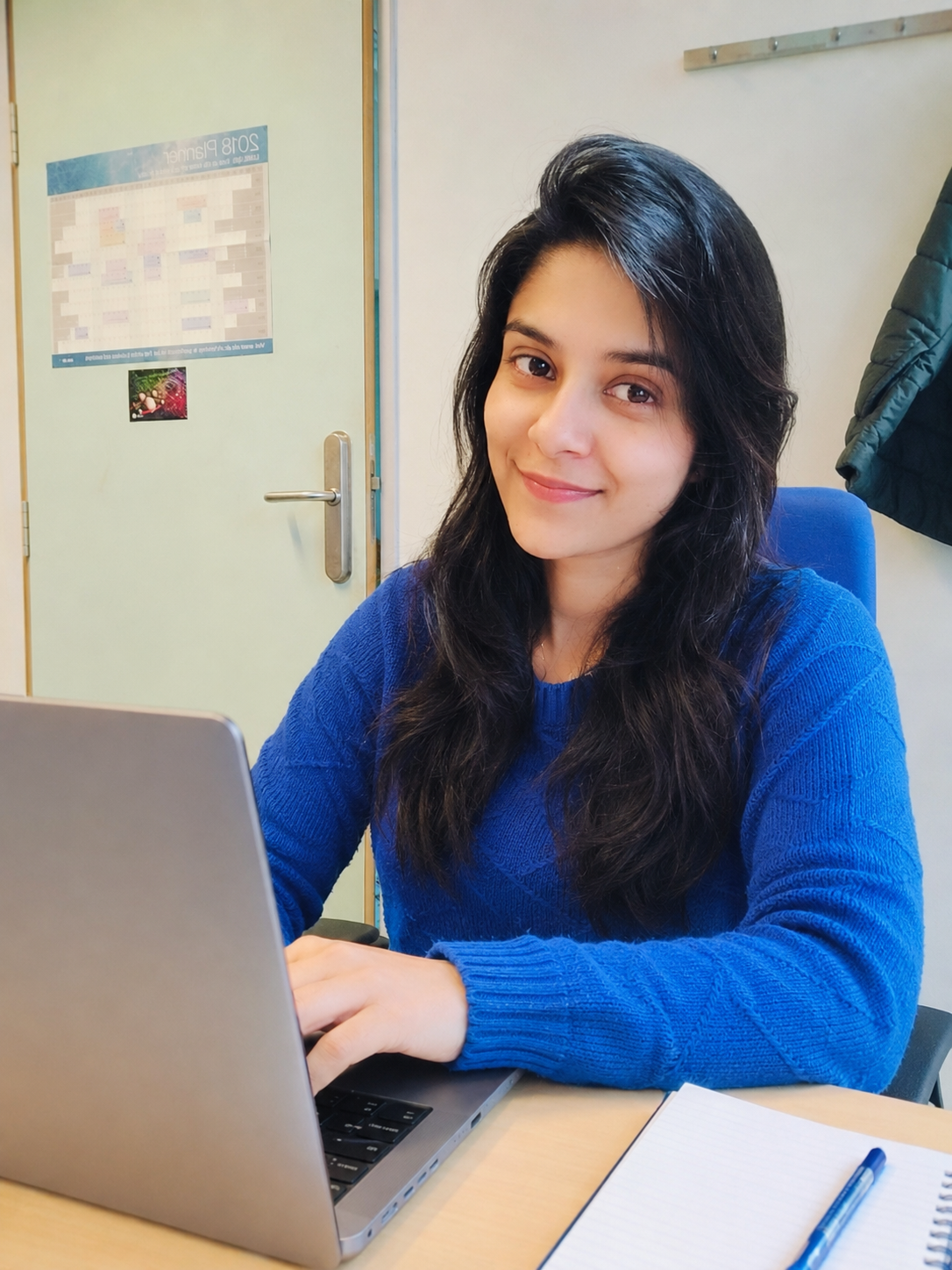
Dr. Bipasa Kar is a postdoctoral researcher from India currently based at the Department of Bioinformatics at the University of Würzburg, Germany, where she is conducting an independent research project funded by the DFG Walter Benjamin Programme. Her work focuses on the virulence and drug resistance of Acinetobacter baumannii, a bacterial pathogen of growing global concern. We spoke with her about her research, the proposal process and what the experience of working in Germany has meant for her career.
DFG India: Could you introduce yourself and tell us about the research you are conducting under your Walter Benjamin fellowship?
Dr. Bipasa Kar: My research focuses on Acinetobacter baumannii, one of the most dangerous drug-resistant bacterial pathogens globally, on understanding how its virulence factors are expressed differently depending on environmental conditions, such as antibiotic exposure or biofilm formation.
My interest in antibiotic resistance goes back to my undergraduate years. During my PhD at the National Institute of Health Research, Bhubaneswar (NIHR), I worked on the epidemiological distribution of beta-lactam resistant bacteria and explored plant-derived compounds as potential alternatives to conventional antibiotics, and through that work, I became fascinated by a deeper question: why do some bacteria evolve into resistant, virulent pathogens while others remain harmless commensals? Understanding that distinction, I believe, holds the key to developing genuinely new treatments. This question now also sits at the heart of my Walter Benjamin project, which combines multi-omics data analysis with computational drug design to identify novel targets and propose antibody-drug conjugates against the bacterium.
DFG India: How did you first come across the Walter Benjamin Programme, and what made it the right fit for your situation?
Dr. Bipasa Kar: I first learned about the Walter Benjamin Programme at a seminar organised through an exchange project between India and Germany, where it was introduced as a funding opportunity specifically designed for early-career researchers wishing to pursue their own independent project. At the time, I was already working in a research group in Germany, but on a project that did not fully align with my core research interest in antibiotic resistance. The Walter Benjamin Programme offered exactly what I needed: the freedom and institutional support to develop my own scientific agenda.
What distinguished it from other options was precisely this emphasis on independence. Many postdoctoral positions require you to work within someone else's framework. This programme gave me the chance to design and lead a project that reflects my own scientific vision, which is an exceptional opportunity at this stage of a research career and a meaningful stepping stone toward my longer-term goal of establishing my own group.
The Walter Benjamin Position funds a full employment contract at a German university or research institution for up to two years, and is open to early-career postdocs of all nationalities. The Walter Benjamin Fellowship is available to researchers already employed in Germany who wish to conduct a research stay at an institution abroad. In both cases, the defining feature of the programme is independence: the research project is designed and led by the recipient, not by a host supervisor. Both variants provide funding for up to two years.
DFG India: Could you walk us through the proposal process? What does it involve, and is there anything you would approach differently if you were to start again?
Dr. Bipasa Kar: My first step was to carefully read through the eligibility criteria on the DFG website. I then reached out to a contact person at the DFG, who was extremely helpful in advising me that the Walter Benjamin Position, rather than the fellowship variant, was the right option for my career stage. That guidance was invaluable.
From there, I developed my proposal over several months, working through the scientific rationale, the work packages, the timeline and the risk management strategies. After submission, it took approximately nine months to receive the outcome, which is something to factor in when planning your timeline.
If I were to start again, I would begin the planning process earlier and invest even more time in structuring the proposal strategically from the outset. This requires you to think carefully not just about your project, but about how to communicate its novelty, feasibility and relevance in a compelling way. I would also advise reaching out to DFG contacts early on, as they are genuinely approachable and their guidance can save you a great deal of time.
DFG India: How has the fellowship shaped your research and your development as a researcher?
Dr. Bipasa Kar: The most significant impact has been the opportunity to build depth and ownership in a research area I am truly passionate about. Having my own project means I am not simply contributing to someone else's goals. I am generating the foundational work that will support my next major career step, which is applying for an independent group leader position, such as offered under the Emmy Noether Programme.
The project is also giving me hands-on expertise in multi-omics data analysis, regulatory network construction and computational drug design, skills that are essential for the kind of systems biology research I want to lead in the future. Being embedded in the department of Bioinformatics at the University of Würzburg and collaborating with colleagues in experimental chemistry and clinical microbiology has also significantly expanded my professional network. In every sense, this fellowship is the preliminary study for my next chapter as an independent scientist.
DFG India: How is your experience in Germany so far? Anything that stood out in your lab environment and the people your are engaging with?
Dr. Bipasa Kar: The experience has been genuinely positive. The work-life balance here is something I had heard about but underestimated before arriving, and the conditions in Germany make it easier to settle and focus on the research. My colleagues are friendly, open and collaborative, which matters a great deal when you are working independently and need input from different directions.
What has struck me the most is how international the environment is. Our lab alone brings together researchers from Turkey, Iran, Egypt, the USA, Slovakia and India. Those conversations, across different scientific traditions and research cultures, have expanded the way I think. I have found myself learning from fields adjacent to my own in ways that a more homogeneous environment might not have offered. That kind of exposure is something I had not fully anticipated, and it has shaped how I think about science as much as anything else.
DFG India: What would you want researchers in India to know about the programme? And what comes next for you?
Dr. Bipasa Kar: To any early-career researcher in India who is hesitating: this programme is worth pursuing seriously. What I find particularly valuable about Germany’s research environment is the genuine openness to fundamental, curiosity-driven science. There is also a strong culture of collaboration. My project involves partnerships with colleagues in antibody synthesis, medicinal chemistry and clinical microbiology, all within the same university.
One thing I wish someone had told me before applying: do not wait until your research question is fully polished before reaching out to the DFG. Contact them early, ask questions and ask for feedback. The proposal process is more accessible than it might seem from the outside. And if your research interest does not perfectly match the focus of the lab where you are based, that is not a barrier. The Walter Benjamin Programme is specifically designed to bridge exactly that gap.
My long-term goal is to establish my own research group focused on the biology and treatment of drug-resistant pathogens. The Walter Benjamin position is the essential foundation for that: it provides the preliminary data, the publications and the demonstrated independence that a group leader application requires.
Collaboration with India is something I feel strongly about, and not just for sentimental reasons. South Asia, and India in particular, is one of the most significant reservoirs of carbapenem-resistant A. baumannii globally. The virulence factors and drug targets I am identifying in my current project are directly relevant to the clinical strains circulating in Indian hospitals. I would very much like to establish collaborations with Indian research institutions and hospitals to validate these findings in a clinically diverse patient population. This is both scientifically important and a meaningful way to contribute to tackling antimicrobial resistance in the region where the burden is highest.
DFG India: Thank you very much for the Interview.
Further Information
For further information on the Walter Benjamin Programme and other DFG funding opportunities for early-career researchers, please refer to the following pages:
The interview was conducted in written form by DFG India(externer Link) and edited by Dr. Franziska Langer. The article was reviewed and approved by the interviewee before publication.
Cookie-Settings
Our website uses cookies that are strictly necessary for its technical functionality and cookies for the collection of statistical information (analytical cookies).
We use the Matomo analytics service on our websites to analyse the use of our online services. Matomo generally operates without cookies(Anc. Analytical cookies help us gain a better understanding of how our websites are used, enabling us to improve and optimise our online services for users. If you consent to the use of Matomo cookies in the cookie banner or here on this page, these cookies can be stored on your device. We analyse how visitors use our website anonymously by collecting their IP addresses only in truncated form. For this reason, it is not possible for us to identify you as a user. Your data is not disclosed to third parties.
You can use the Cookie settings(externer Link) to revoke your consent to the processing of your data at any time. You can also remove the cookies from your browser at any time before they expire.